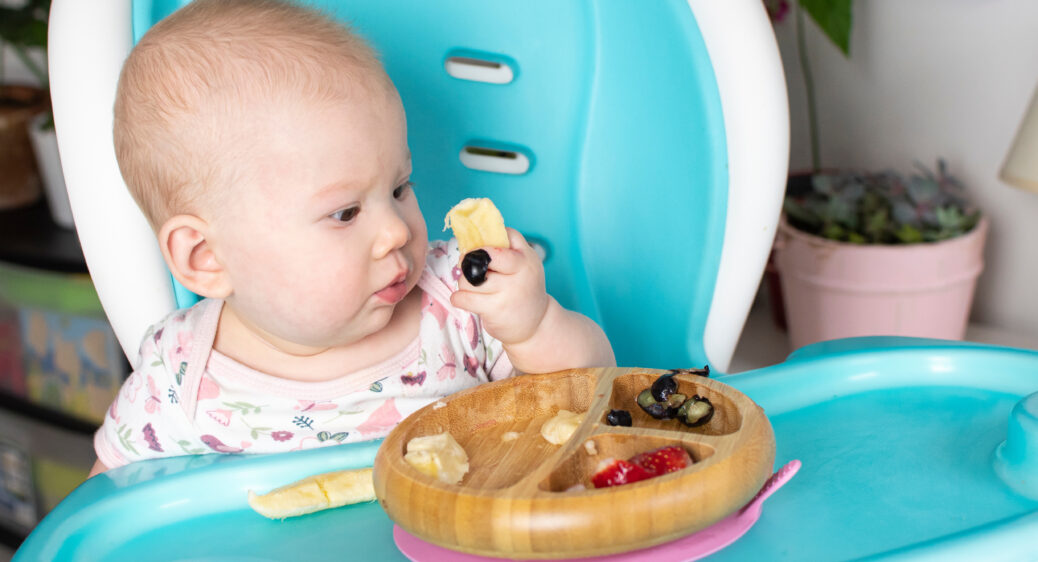
As parents, one of our very first (and most important) jobs is feeding our child. But eating isn’t as automatic as it might seem. Our bodies are designed to prioritize breathing first, not eating. That means babies and toddlers have to learn how to pause their breathing long enough to swallow safely, and that takes coordination and practice.
In the first month of life, feeding is mostly instinctive (like when a newborn roots and sucks). After that, however, the brain has to take over and help develop the motor skills needed for eating. And here’s something surprising: eating is one of the most complex physical tasks we do! It uses all of our body’s systems and muscles and can involve 25–30 different steps.
For infants and toddlers, there is so much to learn. Mealtimes and snack times aren’t just about nutrition, they’re also full of sensory and motor learning experiences. As children grow, their nutritional needs change, and they reach new milestones like finger feeding, using utensils, drinking from a straw, and using a cup.
Feeding Support
For many children, these skills develop naturally over time. But sometimes there are challenges along the way. When that happens, seeking guidance and support can be a helpful and wise step to keep your child moving forward with confidence.
Learn More
Get additional feeding tips and resources to support your little one’s journey.
Questions?
Have questions or want more information? Contact your Summit DD contact for additional support or resources.